Installing LED Shop Lights: What to Plan First
To install LED shop lights, plan the layout, mounting method, power source, and safe access first. Follow the fixture instructions and local electrical rules, and ask a qualified electrician about any hardwiring.
On this page (8 sections)
- What should you plan before installing LED shop lights?
- How do you choose where shop lights go?
- Should you surface mount or hang LED shop lights?
- How do you plan the power and wiring?
- What tools and access should you prepare?
- What safety checks matter during installation?
- How can you check the layout before finishing?
- What is the simplest installation plan?
To install LED shop lights, plan where each fixture will go, how it will mount, and how it will get power before you climb a ladder. Follow the fixture instructions and local electrical requirements, and have a qualified electrician handle work that involves wiring.
Start with the tasks you need to see clearly, such as a bench, tool wall, or parking area. Then choose a layout that spreads light across those spaces without blocking the garage door or leaving fixtures hard to reach.
What should you plan before installing LED shop lights?
Plan fixture locations, mounting points, power access, and safe working space before installation. The right layout depends on the room, ceiling height, fixture shape, and whether you work at a bench or across the whole floor.
Measure the room and mark the ceiling on a simple sketch. Include the garage door tracks, opener, shelves, beams, and any existing outlets or switches.
Check the fixture instructions for its mounting method, required hardware, linking limit, and electrical needs. Don't assume two lights that look alike use the same mounting or connection system.
For a broader layout, see our guide to how to light a garage. If you're still deciding between fixture types, our shop light packs guide explains what to compare.
How do you choose where shop lights go?
Place lights to cover the areas where you work and move, not just the center of the ceiling. A row above a workbench may help with close tasks, while fixtures over the open floor cover general garage use.
Draw each fixture on your sketch and look for dark spaces between its likely coverage areas. Consider where your body or a vehicle could cast a shadow while you're working.
Check ceiling height and door movement before marking mounting points. A hanging fixture must clear the raised garage door, opener, storage, and anything carried through the room.
If you need help estimating brightness for a two-car garage, read how many lumens a 2 car garage needs. That estimate can help frame the plan, but it doesn't replace fixture spacing or the manufacturer's guidance.
Should you surface mount or hang LED shop lights?
Use the mounting method supported by both your ceiling and the fixture. Surface mounting keeps a fixture close to the ceiling, while hanging can lower it into a taller room or over a specific work area.
Check what mounting hardware comes with the light and whether it suits the ceiling material. Attach the fixture only to a support that can hold it securely, using the hardware and method specified by the manufacturer.
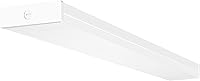
The ELEKICO 4 ft lights support hanging or surface mounting, giving you those two layout options.
Mark every mounting point before lifting a fixture. If you plan to hang lights, make sure the chain, hooks, and structure are compatible and rated for the job.
The Lithonia 36-inch chain kit includes two chains and two hooks for suspending compatible strip or wrap fixtures indoors. It is rated for 35–40 lb and is intended for dry locations.
Check fixture instructions before using a chain kit. Compatibility, installation steps, and support requirements depend on the light and ceiling; don't treat a kit's weight rating as proof that your ceiling structure is suitable.
How do you plan the power and wiring?
Plan power around the fixture's instructions and the electrical setup in your space. A plug-in light needs a suitable outlet, while a hardwired installation may need an electrician.
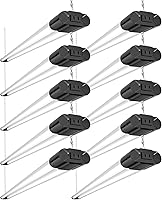
The ELEKICO 4 ft light includes a standard plug, according to its product description. Phiwicsh describes its 8 ft light as plug-and-play and says no more than 4 units should connect in series.
Don't exceed a fixture's stated linking limit or mix connection parts unless its instructions allow it. Keep cords away from sharp edges, moving doors, and places where they could be pinched or snagged.
If your plan requires new wiring, a new circuit, or changes to a switch or outlet, consult a qualified electrician. Check applicable local electrical requirements before work begins.
Our guide to hardwired or plug-in garage lights can help you think through which setup fits your space. The choice affects outlet access, cord routing, and the kind of installation work involved.
What tools and access should you prepare?
Prepare the tools named in the fixture instructions, along with a stable ladder and a clear work area. Check the box contents before starting so you know whether you need separate mounting hardware.
Move vehicles, tools, and storage away from the work area. Keep the floor dry and clear, and make sure someone can steady the ladder if needed.
Don't balance on a chair or reach sideways from a ladder. If the ceiling is too high for safe access with equipment you have, arrange safer access before lifting a fixture overhead.
Switch off power before handling electrical connections, and verify the circuit is off using the method recommended for the work. If you aren't sure how to isolate the power safely, stop and call an electrician.
What safety checks matter during installation?
Follow the fixture instructions and use the right support for its weight and mounting method. Work with power off wherever electrical connections are involved, and don't install a fixture in a location it isn't designed for.
Keep indoor-rated lights and accessories in dry indoor spaces. The Lithonia chain kit is intended for dry indoor use and isn't meant for wet or outdoor locations.
Inspect cords, connectors, hooks, and mounting points before use. Don't use damaged parts, force a connector, or leave a fixture hanging from an uncertain support.
When the lights are in place, check that they sit securely and clear doors, vehicles, and stored items. Restore power only after the installation is complete and you've followed the manufacturer's instructions.
How can you check the layout before finishing?
Check the room at night or with existing lights off to see whether the new layout leaves dark areas. Stand at the bench and across the floor, and notice whether fixtures cause glare or shadows where you work.
If a dark spot remains, review the spacing and aim before adding more lights. Use the fixture instructions to confirm whether you can link another unit or need a different placement.
Think about light color as well as coverage. Our guide to 4000K vs 5000K garage lighting explains how those color temperatures can feel different in a work area.
What is the simplest installation plan?
For a safe LED shop light installation, map the coverage first, confirm mounting and power, then install according to the fixture instructions. Choose surface mounting for a close ceiling fit, or hanging when the fixture and support allow it and the extra clearance works in your room.
Choose the ELEKICO 4 ft pack if its hanging or surface mount options suit your layout. Consider the Phiwicsh 8 ft pack for longer fixtures, while keeping its 4-light series limit in mind; use the Lithonia chain kit only with compatible fixtures and suitable indoor support.
If the layout still feels unclear, revisit how to light a garage before marking the ceiling. A careful plan makes it easier to spot clearance and coverage problems before the lights are up.
Frequently asked questions
Can you install LED shop lights without hardwiring?
Some LED shop lights use a plug and can connect to a suitable outlet, while others are made for hardwired installation. Check the fixture instructions and your electrical setup before buying.
Don't use an extension cord as a permanent substitute for the wiring or outlet the manufacturer requires.
How far apart should LED shop lights be?
There isn't one spacing that suits every garage or workshop. Room size, ceiling height, fixture output, beam pattern, and the work you do all affect placement.
Sketch the layout, check the manufacturer's spacing advice, and plan for even coverage without dark gaps between fixtures.
Can you link LED shop lights together?
Only link fixtures that are designed to connect, and stay within their stated connection limit. For example, ELEKICO says its 4 ft lights can link up to 6 units, while Phiwicsh says to connect no more than 4 of its 8 ft lights in series.
Follow each fixture's instructions.
Should shop lights be hung or surface mounted?
Choose surface mounting when the ceiling and fixture allow it and you want the light close to the ceiling. Hanging can help place fixtures lower, but the support, chain, and clearance must suit the fixture and room.
Follow the fixture instructions and check that nothing will hit a raised garage door.