How to Light a Garage: A Plain Guide for Homeowners
To light a garage well, combine even ceiling light with focused task lighting where you work. Plan around the room’s size, ceiling height, surfaces and electrical setup before choosing fixtures.
On this page (8 sections)
- How do you plan garage lighting?
- How bright should garage lighting be?
- Which garage light style fits each area?
- Where should you place garage lights?
- Should you choose 4000K, 5000K or 6500K light?
- Do plug-in or hardwired lights fit your garage?
- How can you make garage lighting safer?
- What is a simple garage lighting plan to start with?
To light a garage well, combine even ceiling light with focused task lighting where you work. Plan around the room’s size, ceiling height, surfaces and electrical setup before choosing fixtures.
A bright fixture in the middle can still leave the corners, workbench or area beside a parked car in shadow. Sketch the space and note what you do in each part before deciding where light should go.
For a quick comparison of fixture styles, start with our best shop lights for a garage and best garage ceiling lights.
How do you plan garage lighting?
Plan garage lighting by dividing the room into general light, task light and detail light. General light covers movement and parking, task light serves benches and projects, and detail light moves to the exact spot you need.
Start with a simple overhead sketch. Mark the garage door, parked vehicles, shelves, steps, workbench and any ceiling obstacles.
Then mark the places where your hands or tools need to work. A bench, tool wall or repair area may need a fixture near the task instead of a stronger fixture far overhead.
Think about shadows before you choose lights. A vehicle can block ceiling light from reaching the floor beside it, and shelves can shade a bench if the light sits behind them.
A useful plan aims for overlapping coverage rather than one bright point. That helps reduce dark gaps as you move around the room.
What should you measure before choosing garage lights?
Measure the garage’s length, width and ceiling height, then mark the main work areas. These measurements help you compare fixture count, placement and mounting options.
Record where the ceiling joists, outlets, switches and garage door tracks sit. Also note the opener, storage racks and any pipes or ducts that could block light or limit mounting.
If the garage has a low ceiling, fixtures that hang down may get in the way. If it has a tall ceiling, a fixture made for higher mounting may be a better fit.
Measure the workbench and other fixed surfaces, too. The position of a light over the bench can matter more than a high lumen figure on a fixture at the far side of the room.
How bright should garage lighting be?
Choose brightness based on the tasks and space you need to light, then spread the fixtures to cover those areas. There is no single output that suits every garage.
For a general plan, estimate the room area by multiplying its length by its width. Use that as a starting point for comparing total light output across possible fixtures, then account for the ceiling height, fixture spacing and surfaces.
Dark walls and clutter can make a space feel dimmer. A glossy floor or work surface can reflect light into your eyes, so fixture placement and aiming matter alongside brightness.
For a more specific starting point, read how many lumens a 2-car garage needs. Treat any estimate as a planning aid, then check how the proposed layout covers your own work areas.
Why can a bright garage still feel dim?
A garage can feel dim when light falls unevenly or shadows cover the task area. A high-output light near the center does not guarantee useful light at the walls or workbench.
A low fixture may be blocked by an open garage door. A parked vehicle can also cast a large shadow across the floor or a nearby work surface.
To reduce those gaps, position fixtures in rows or zones that match the space. Check the planned layout from the places where you stand, not only from the center of the room.
Which garage light style fits each area?
Choose fixture styles by where they mount and what they need to cover. Linear shop lights suit rows over benches or parking areas, while a high bay can suit a tall ceiling and a portable light can follow close work.
Linear shop lights for broad ceiling coverage
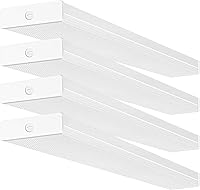
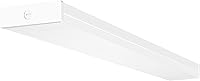
Linear shop lights can work well in rows across a garage ceiling. They make sense when you want to cover a long area, such as a vehicle bay or a workbench run.
BBOUNDER’s 4 ft shop lights use 6500K light and can connect up to 4 fixtures with plug connections. They can be mounted on the ceiling or suspended, according to the brand’s product information.
Before you choose a multi-light pack, count the ceiling positions and check where the power cord can reach. The fixture’s stated output does not tell you by itself how bright every corner will feel.
Hexagon lights for a broad, visible ceiling pattern
A hexagon kit can suit an open garage where you want a large ceiling pattern over the work area. Its many connected light tubes can cover a wider layout than a single central fixture.
The MODERN kit includes light tubes, connectors and both plug-in and hardwire power cords. Its instructions describe mounting to a hard ceiling with screws or to a grid system with cable ties.
Check the ceiling and plan the kit’s overall dimensions before buying. The brand notes that one power cord has limits on the number of connected tubes, so follow its connection instructions for the setup.
High bay lights for taller ceilings
A high bay fixture can suit a tall garage or workshop where you need light directed down from a higher ceiling. Check the fixture’s output, dimming method, mounting and cord before deciding whether it fits your setup.
The HYPERLITE fixture is listed with a hanging hook, safety rope and 5 ft power cord with a 110V plug. It supports 1–10V dimming, according to its product information.
A high bay is not an automatic fit for every garage. Compare its mounting height and coverage with your ceiling and the tasks below it, and see our high bay lights for tall ceilings guide.
Portable work lights for close tasks
A portable light can help when the work moves from a bench to a vehicle or another part of the garage. It adds focused light without requiring a ceiling fixture over every possible task.
The light runs on a 20V MAX battery, which is not included. Its pivoting head and belt hook give you options for positioning it while you work.
Use a portable light to fill a shadow or see a small area more clearly. It should complement your general lighting plan rather than carry the whole room.
Where should you place garage lights?
Place garage lights over the areas you use, with enough spacing to avoid dark gaps. Keep fixtures clear of moving doors and other obstacles, and make sure the light reaches your work surfaces.
A practical ceiling layout often uses parallel rows over parking or storage areas, with a separate zone over the bench. The exact arrangement depends on the room and fixture, so use the product’s mounting guidance when you set spacing.
Stand where you expect to work and imagine the light path. If your body or a shelf blocks it, move the fixture or add task lighting near the work surface.
For lights above a vehicle, consider how a raised hood, open trunk or garage door changes the shadows. You may need a portable light for engine or body work even if the ceiling is bright.
Should you choose 4000K, 5000K or 6500K light?
Choose a color temperature that makes the garage comfortable for its main use and lets you see the details you care about. 4000K, 5000K and 6500K are different light tones, so compare them in the actual context of the room.
Some people prefer a less cool tone for a garage used for storage and everyday movement. A cooler tone may suit detail work where you want a crisp appearance, but preference varies.
Check the fixture’s stated color temperature before combining lights. Different tones across adjacent ceiling rows can look uneven, especially when the fixtures illuminate the same work surface.
Our 4000K vs 5000K garage lighting guide explains the choice in more detail. For a mixed layout, try to keep the main ceiling fixtures consistent and reserve a different tone for a separate task area if it suits you.
Do plug-in or hardwired lights fit your garage?
Plug-in lights suit a garage with accessible outlets and a safe cord path, while hardwired lights suit a planned permanent installation. The right setup depends on the fixture, existing wiring and local electrical requirements.
A plug-in cord should not cross a walking path, get pinched by the garage door or hang where it could catch on equipment. Check how the fixture’s cord reaches its outlet before you settle on its position.
Hardwired fixtures can reduce visible cords, but connecting them involves electrical work. Follow the fixture instructions and local rules, and use a qualified electrician if the work is beyond your experience.
Compare the trade-offs in our hardwired vs plug-in garage lights guide. If you plan to install new ceiling fixtures, see what to plan before installing LED shop lights.
How can you make garage lighting safer?
Make the plan safer by following fixture instructions, using suitable mounting points and keeping lights clear of moving parts. Turn off power before installation and get qualified help for wiring work you are not trained to do.
Check that the ceiling can support each fixture and its mounting method. Use the supplied hardware that is meant for the fixture, and secure cords so they cannot snag or pull loose.
Keep lights away from the garage door’s path, tracks and opener. Do not route cords through door gaps or across places where people or vehicles move.
If a fixture buzzes, flickers or stops working, switch it off and inspect the setup according to its instructions. Our guides to buzzing LED garage lights and LED shop lights that stopped working cover common next steps.
What is a simple garage lighting plan to start with?
A simple plan starts with even overhead fixtures, one focused light at the main work area and a portable light for changing tasks. Adjust the number and placement after you map the room and check fixture guidance.
For a typical home garage, begin by marking the parking area and any bench or storage zone. Place the ceiling fixtures so their coverage overlaps, then add a task light where you need to see close detail.
If your ceiling is tall, compare high bay options and mounting requirements. If the ceiling is low or crowded, look at fixtures that mount close to it and avoid hanging into the way.
Choose 4000K, 5000K or 6500K based on your preference and work. Keep the main fixtures consistent in color, and use a portable light when the task moves.
Pick linear shop lights for rows and broad coverage, a high bay for a tall ceiling, and a portable spotlight for moving tasks. Measure first, then compare the best shop lights for a garage and the best garage ceiling lights for your layout.
Frequently asked questions
How many lights do I need in a garage?
The number depends on the garage’s area, ceiling height, fixture output and how evenly you place the lights. Sketch the ceiling, mark doors and obstructions, then compare fixture spacing and light output against the tasks you do.
Add focused task light where ceiling fixtures leave shadows.
What color temperature is best for garage lighting?
Many garage fixtures use 4000K or 5000K light, while some shop lights use 6500K. Choose the tone that feels comfortable for the room and makes details easy for your tasks.
Compare the options in our 4000K vs 5000K garage lighting guide.
Are plug-in or hardwired garage lights better?
Plug-in fixtures can fit a garage with accessible outlets and a suitable cord route, while hardwired fixtures may suit a planned permanent layout. Check the fixture instructions, circuit capacity and local electrical rules.
For the trade-offs, read our hardwired or plug-in garage lights guide.
Do tall garage ceilings need high bay lights?
A high bay light can suit a tall, open garage where a low-profile fixture would sit far from the work area. Ceiling height, beam spread, output and mounting method all affect the result.
See our guide to high bay lights for tall ceilings before choosing.
Can one bright ceiling light illuminate a whole garage?
One bright fixture may leave dark edges, shadows behind vehicles or poor light over a bench. Several well-spaced ceiling fixtures usually give you more even coverage, with a separate work light for close tasks.
Plan for the areas you use, not only the center of the floor.