Lighting a Shop Garage: How to Choose What Goes Up
The best lighting for a shop garage combines even overhead light with focused task lighting. Choose fixtures for the ceiling height, work areas and wiring you have, then check brightness, color temperature and safe mounting before installation.
On this page (7 sections)
- What is the best lighting for a shop garage?
- How do ceiling height and fixture type affect the plan?
- Which light features should you compare?
- Which fixture types fit common shop garage layouts?
- How should you plan fixture spacing?
- What should you check before installing shop lights?
- How can you choose the right shop garage lighting?
The best lighting for a shop garage combines even overhead coverage with focused light at the bench, vehicle or machine. Choose fixtures based on ceiling height, the work you do and how you can power and mount them.
Start by dividing the garage into work zones. A clear layout helps you avoid dark corners, shadows from your body and glare in your eyes.
For a broader starting point, see our plain guide to lighting a garage. This guide focuses on choosing fixtures for a shop setup.
What is the best lighting for a shop garage?
The best setup uses multiple fixtures placed for even coverage, then adds task lighting where you need more detail. A single bright fixture may leave shadows behind a vehicle, workbench or tall tool cabinet.
Measure the room and mark the ceiling features before shopping. Include garage doors, tracks, rafters, shelves and the places where you stand or work.
For each zone, note the task and the likely source of shadows:
| Shop zone | Lighting goal | What to plan |
|---|---|---|
| Vehicle bay | Broad overhead coverage | Fixture rows that work around the open garage door |
| Workbench | Clear light on small parts | A fixture above or in front of the bench, plus a movable task light |
| Storage wall | Light that reaches shelves | Avoid placing tall shelves between the fixture and the items |
| Machine area | Coverage over the work surface | Check whether the machine or operator blocks the light |
| General floor | Even light for moving around | Avoid large gaps between fixtures |
A simple ceiling sketch can show where fixtures belong before you buy them. Add the light locations, power connections and any obstructions, then check the plan from the floor.
How do ceiling height and fixture type affect the plan?
Ceiling height helps determine how far light has to travel and what fixtures can be mounted safely. A low ceiling often works better with distributed fixtures, while taller open spaces may call for high bay lights.
Long strip-style fixtures can provide even light along a row. UFO-style high bays concentrate light from a central point, so their placement and mounting height matter.
A decorative grid or hexagon kit can cover a selected ceiling area, but it is not a substitute for planning around the actual work zones. Check its overall footprint and power arrangement against your ceiling and tasks.
If the ceiling is tall, review our guide to high ceiling shop lights and how many high bay lights a shop may need. For a standard ceiling, compare the options in our shop garage light roundup.
Which light features should you compare?
Compare light output, color temperature, fixture shape and installation method together. A high lumen figure alone does not tell you whether the light will reach the bench or spread evenly across the floor.
Consider these details:
- Output: Check each fixture's stated lumens and plan how many fixtures the space needs.
- Color temperature: Choose a color appearance you can live with across the whole shop. Mixing different temperatures can make adjacent areas look uneven.
- Fixture shape: Long fixtures can suit rows; high bays suit taller open areas; a portable light can fill a temporary shadow.
- Connection type: Check whether the fixture uses a cord, supports linking, or can be hardwired.
- Mounting: Confirm the intended ceiling or floor mounting and whether the structure can support it.
- Controls: Decide whether you need separate switches for different zones.
For help comparing color temperatures, see 4000K vs 5000K garage lighting. If you are choosing between a permanent ceiling connection and a cord, read hardwired or plug-in garage lights.
Which fixture types fit common shop garage layouts?
Choose the fixture type that matches the space and task, then verify its installation details. These examples cover long overhead rows, tall ceilings, broad ceiling patterns and movable work light.
Long fixtures for rows across the shop
Long fixtures can work well when you want to distribute light across a bench or vehicle bay. Plan the rows so they cover the areas where you work, rather than putting every fixture in the center of the ceiling.
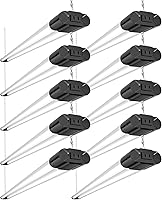
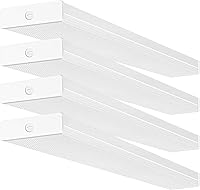
Barrina gives each fixture a 72 W rating and says up to 4 can connect using the provided connectors or connector cords. The package includes both power cords with switches and hardwiring components, so decide which connection method fits your installation before setting the layout.
This type of setup suits a shop that needs broad overhead coverage and has room for long fixtures. Measure the ceiling and check the product’s 94 in length before planning placement.
For more options in this category, see our best 8 foot LED shop lights.
High bays for taller open ceilings
High bays can suit taller shop ceilings where a central fixture needs to cover an open work area. Their output and mounting position make spacing especially important.
Amico describes this fixture as UL listed and designed for wide-area illumination. It has an E26 base, so check the mounting setup and connection requirements before planning it as a ceiling fixture.
A 10-pack may be more than a small shop needs. Count the planned locations and confirm the space can use the fixture's output and form before choosing a pack size.
For more on this fixture style, read what a high bay light is and our best high bay shop lights guide.
Hexagon kits for a defined ceiling area
A hexagon kit can create a connected lighting pattern over a selected section of ceiling. Measure its footprint and plan the power connection before deciding how much of the garage it should cover.
MODERN describes the kit as a plug-and-play design with connectors that lock together. Its instructions specify limits for the number of tubes connected to one power cord, so follow those limits and the installation manual.
This shape can fit a detailing bay or a dedicated work area where the ceiling pattern is part of the plan. Check the kit's listed dimensions against doors, tracks and other ceiling obstacles.
See our guide to planning a hexagon garage light install for layout details.
A portable light for changing tasks
A portable work light can help when the main ceiling fixtures cast a shadow on a repair or inspection. It supplements overhead lighting rather than replacing it across the whole garage.
The DeWalt DCL079B uses a telescoping pole to raise the light head and a latch mechanism to extend and collapse its legs. The light is sold as a tool only, so account for the battery separately if you need one.
This option suits task areas that move around the garage. Compare it with other cordless work lights if portability matters more than permanent ceiling coverage.
How should you plan fixture spacing?
Place fixtures over the work areas and between them, then adjust for obstructions and likely shadows. Even spacing on paper is only a starting point because ceiling height, beam spread and room surfaces affect the result.
Use this planning sequence:
- Mark the vehicle bay, bench, machines and storage zones.
- Mark ceiling obstructions, including tracks, beams and overhead storage.
- Place overhead fixtures to cover the main zones without large gaps.
- Check the plan from the floor and imagine where your body or equipment will block light.
- Add a task light where a fixed ceiling fixture cannot reach the work.
- Confirm that each fixture can connect to a suitable power source and support.
Avoid placing every light in one line down the center if your work happens at the sides. A second row may help cover the bench and storage wall, depending on the room.
What should you check before installing shop lights?
Check mounting, wiring, clearances and the fixture's installation instructions before work begins. Electrical work at the ceiling can carry shock and fall risks, so use a qualified electrician when the job requires new wiring or you are unsure about the circuit.
Confirm that the ceiling structure can hold each fixture and that cords will not hang where they can snag or be pulled. Keep lights clear of garage door tracks and moving parts.
For linked fixtures, follow the maker's connection limits. Do not assume that similar looking lights can safely connect to one another.
If the setup involves hardwiring, see our LED shop light installation planning guide and follow local electrical requirements. The garage lighting safety guide covers additional planning points.
How can you choose the right shop garage lighting?
Choose the layout by matching fixture type to ceiling height and work zones, then use task lighting to fill any remaining shadows. A small shop with a bench may need a few distributed fixtures and one movable light; a tall open shop may need high bays planned for mounting height and coverage.
Measure first, decide how each fixture will be powered, and compare the light output and color temperature across the room. If the plan centers on overhead fixtures, compare garage ceiling light options before finalizing the layout.
For a shop garage, start with the zones where you work most, then add coverage where the layout leaves gaps.
Frequently asked questions
What is the best lighting for a shop garage?
The best lighting for a shop garage depends on ceiling height, work tasks and fixture placement. Use evenly spaced overhead fixtures for general coverage, then add a portable or focused light where you inspect or repair items.
Check the fixture's output, beam pattern, mounting needs and electrical requirements before choosing.
How many lumens do I need for a garage workshop?
There is no single lumen target for every garage workshop because room size, ceiling height, surface color and task detail affect how bright the space feels. Start with the work areas and fixture spacing, then compare total output and distribution.
Our guide to lumens for a 2 car garage explains a common starting case.
Is 5000K or 6500K better for a shop garage?
Both can work, but they give the space a different appearance. A 5000K light is commonly described as daylight white, while 6500K is cooler in tone.
Compare color temperature across the fixtures you plan to use, especially if one work area needs consistent color.
Do shop garage lights need to be hardwired?
Not always. Some fixtures use a power cord, while others support hardwiring or both methods.
Check the specific fixture's connection options and your existing circuit before buying.
If new wiring or a ceiling connection is involved, use a qualified electrician and follow local electrical rules.
Are high bay lights right for a home shop garage?
High bay lights can suit a shop garage with a tall ceiling and broad open floor, but they may be excessive for a low ceiling or small work area. Compare mounting height, beam spread and output with the space.
For shorter ceilings, distributed shop lights may be easier to plan.