How Many High Bay Lights Do I Need?
The number of high bay lights you need depends on shop size, ceiling height, fixture output, and the work you do. Start with a layout that spreads light across the whole floor, then adjust for benches, machines, and dark corners.
On this page (7 sections)
- How many high bay lights do you need for a shop?
- How does ceiling height change the number of fixtures?
- How should you space high bay lights?
- How many lumens should each fixture have?
- How can you check a layout before installing?
- Which high bay fixtures fit different shop plans?
- What is a practical way to decide how many high bay lights you need?
The number of high bay lights you need depends on your shop's floor area, ceiling height, fixture output, and work areas. Lay out fixtures to spread light across the room, then check for shadows over benches, machines, and storage.
A useful plan starts with the whole room, not a guessed fixture count. A wide open shop may need a different layout from a smaller space with shelves or equipment blocking the light.
How many high bay lights do you need for a shop?
You need enough fixtures to cover the floor evenly at your mounting height. There is no reliable count based on square footage alone because fixtures have different output and beam patterns.
Measure the room's length and width, then mark permanent obstacles and key work surfaces. Note the ceiling height and the proposed mounting points, since both affect how light reaches the floor.
A shop with a tall ceiling may need fixtures with more output or closer spacing than one with a lower ceiling. Work involving small parts or close visual inspection can also need more focused light at benches.
For a different kind of lighting plan, see our guide to how many lumens a 2 car garage needs. It explains why room area and use matter when estimating light.
What details should you measure first?
Measure the room, mounting height, and major work zones before choosing a quantity. Draw a simple overhead plan with doors, benches, machines, and storage marked.
Include the height from the floor to the planned fixture position, not just the ceiling height if fixtures hang below it. Check for beams, garage doors, fans, or ductwork that could block light or interfere with hanging fixtures.
How does ceiling height change the number of fixtures?
Higher ceilings spread light over a larger area, but less light reaches the floor. The right fixture output and spacing depend on the fixture's intended mounting height.
ONLYLUX describes its 250W model for installation at 28–35 ft, while its 150W and 200W versions are described for lower mounting ranges. Those ranges apply to the described versions, so confirm the exact model and installation guidance before planning around them.
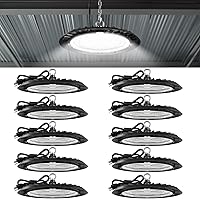
This pack may suit a tall shop where you want to plan several fixtures at once. Each light is described as 37,500 lumens with a 120-degree beam angle.
Don't use the range as a complete layout plan. Room dimensions, obstructions, and the tasks below still affect how many fixtures will provide even coverage.
The guide to what a high bay light is explains how these fixtures differ from other shop lights. If your ceiling is lower, compare fixture types before settling on a high bay.
How should you space high bay lights?
Arrange fixtures in even rows, then check the edges and work zones for gaps. The best spacing depends on mounting height, beam spread, and the room's shape.
Start by dividing the shop into a simple grid. Place the first row far enough from the walls to cover the edges, then space the next rows evenly across the room.
Avoid putting every fixture directly over the center of the floor if your benches or machines sit along the walls. A layout that looks even on paper can still leave those task areas in shadow.
Should high bay lights go over workbenches?
Place light where the work happens, while keeping the overall floor coverage even. A bench may need a fixture centered over it, or a separate task light if overhead light is blocked by shelving or equipment.
HYPERLITE's 150W fixture is dimmable with a compatible 1–10V dimmer, according to the product description. That adjustability can help if you want to tune brightness after installation, though it does not replace a well-planned layout.
The fixture includes a hook, a 5 ft cord with a 110V plug, and a safety rope. Check that its hanging method and electrical connection fit your shop before choosing it.
For a broader overview of tall-ceiling options, browse our high ceiling lights guide. It covers the fixture choices that can affect your layout.
How many lumens should each fixture have?
Compare total light output along with fixture count and placement. A high lumen number does not guarantee even light if the fixtures are too far apart or blocked.
The three fixtures here have different stated outputs: 37,500 lumens for the ONLYLUX 250W, 21,000 lumens maximum for the HYPERLITE 150W, and 24,000 lumens for the CINOTON 160W. Those figures help compare output, but they don't by themselves tell you the light level at every point on the floor.
CINOTON's 160W fixture comes as a 2-pack and includes hooks and a safety chain. Its 24,000-lumen output may help when planning a pair of fixtures for a shop area.
The CINOTON option is described for damp conditions and indoor or outdoor use in its product details. Confirm the specific installation conditions and electrical setup for your space.
How can you check a layout before installing?
Sketch the fixture positions and look for coverage gaps before buying or hanging lights. A plan view helps you spot walls, corners, and work areas that may be missed.
Use the following checks:
- Mark the room dimensions and mounting height.
- Draw the fixtures in evenly spaced rows.
- Mark benches, machines, shelves, and doors.
- Check whether equipment will block light from reaching work surfaces.
- Compare the layout with the fixture maker's mounting guidance.
For detailed work or a large commercial space, a lighting calculation can give a clearer estimate than a rough fixture count. An electrician can also check mounting points, wiring, and whether a dimmer or plug-in setup suits the space.
Read how to hang high bay lights before installation. It covers the planning details around fixture placement and mounting.
Which high bay fixtures fit different shop plans?
Choose based on the mounting height, output, installation setup, and whether you need dimming. The fixture count comes from the room plan, not from a pack size.
The ONLYLUX 250W 10-pack may fit a tall shop plan where the described 28–35 ft mounting range applies. HYPERLITE's 150W model offers dimming and a 5 ft plug-in cord, while CINOTON's 160W model comes as a 2-pack with hooks and a safety chain.
Don't assume a multipack is the right quantity for your room. Calculate the positions first, then compare the pack count and installation requirements with your plan.
For more options, see the best high bay shop lights for tall ceilings. Check each fixture's mounting guidance and wiring details before purchase.
What is a practical way to decide how many high bay lights you need?
For a shop, measure the space, choose fixtures suited to the mounting height, and map an even layout around the work zones. Use fixture output as one input, then look for gaps at the floor edges and over benches.
Choose the ONLYLUX pack if its described mounting range suits your tall ceiling and you need several fixtures. Consider HYPERLITE if dimming matters, or CINOTON if a 2-pack fits the positions in your plan.
Use the high ceiling lights guide to compare fixture types, and check how to hang high bay lights before you install them.
Frequently asked questions
How many high bay lights do I need for a shop?
There isn't one number that fits every shop. The count depends on floor area, ceiling height, fixture output, beam spread, and how much light your tasks need.
Sketch the room, place fixtures in an even pattern, and check for dark areas over workbenches and machines before settling on a layout.
How far apart should high bay lights be?
Spacing depends on mounting height and the fixture's beam pattern, so use the manufacturer's layout guidance when available. As a starting point, arrange fixtures in even rows and avoid large gaps at the walls or between rows.
Check the floor and work surfaces for uneven or shadowed areas.
How many lumens do I need for a high bay shop light?
Lumens alone don't determine the light level at your work surface. Room dimensions, mounting height, beam spread, surface color, and task detail all affect the result.
Compare fixture output and layout together, then consider a lighting calculation or an electrician's advice for detailed work.
Can I use high bay lights in a small shop?
You can use high bay fixtures in a small shop if the ceiling height and mounting method suit them, but they may be more light than the space needs. Check the fixture's installation guidance and output, and consider dimmable options if you need to adjust brightness after installation.