Do LED Garage Lights Really Save Money?
LED garage lights can save money when they use less power than your current lights and run often enough to repay their upfront cost. Compare watts, hours of use, and your electricity rate before replacing fixtures.
On this page (6 sections)
LED garage lights can save money when they use less power than your current lights and run often enough to repay their upfront cost. Compare watts, hours of use, and your electricity rate before replacing fixtures.
The savings aren't automatic. A light used for 20 minutes a week has less chance to repay a costly upgrade than one used for several hours each day.
Do LED lights save money in a garage?
They can, if the replacement uses fewer watts for the light you need. The US Department of Energy explains that LEDs use less energy than traditional incandescent lighting; your actual savings depend on what you replace and how you use the lights.
A fair comparison includes every light in the setup. For example, compare the combined wattage of the LED fixtures with the combined wattage of the fluorescent or incandescent lights they replace.
Also consider whether the new layout provides useful coverage, rather than adding lights you don't need.
Your current fixtures matter too. If they work well and run rarely, replacing them early may take a long time to pay back.
If lamps fail often or the garage stays dim, an upgrade may address those problems while reducing energy use.
For a room-by-room starting point, see our guide to how to light a garage. It can help you plan coverage before choosing fixtures.
How can you estimate the energy savings?
Use wattage, hours, and your electricity rate to estimate the difference. The calculation gives an energy-cost estimate, before the cost of buying and installing new lights.
First, estimate the energy used by each setup:
- Add the wattage of all lights in the setup.
- Multiply by the hours the lights run.
- Divide by 1,000 to convert watt-hours to kilowatt-hours.
- Multiply by your electricity rate per kilowatt-hour.
For a comparison, subtract the new setup's estimated cost from the current setup's cost over the same period. Use a typical week or month, and include seasonal changes if garage use varies.
Keep the assumptions consistent. If the old lights are on for 10 hours a week and the LED lights would also run for 10 hours, compare them at that same schedule.
A motion sensor or habit change could reduce operating hours too, but count that separately from the difference in lamp wattage.
This estimate covers electricity only. For payback, add the upfront cost of the fixtures and any installation work, then compare it with the expected energy savings over time.
Don't assume a specific payback period without your own rates, usage, and costs.
Which costs affect the payback?
Upfront cost, electricity use, operating hours, and replacement needs all affect payback. A lower-wattage option has more opportunity to save energy, but it still needs to suit the garage.
Consider these factors:
- How often you use the lights: More hours create a larger opportunity for energy savings.
- Total fixture wattage: Include every light, not just one tube or fixture.
- Light coverage: A layout that leaves work areas dark may lead you to add more fixtures.
- Installation needs: Plug-in, hardwired, and tube-replacement options can involve different work.
- Replacement and upkeep: Check the stated service life and warranty for the exact option you're considering.
The US Department of Energy's LED lighting guide explains how LEDs compare with other light sources and what can affect lighting choices. For garage-specific needs, our guide to how many lumens a 2-car garage needs can help you think through brightness before comparing energy costs.
Which LED options fit common garage setups?
Choose based on whether you need a complete fixture or replacement tubes. The options below have different wattages, light outputs, and installation approaches, so check compatibility and plan the number of lights for your space.
When does a complete shop light make sense?
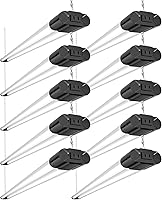
A complete fixture can suit you when you're adding lights or replacing an old fixture, rather than reusing its tubes. The Barrina set includes 10 4-foot lights, with 40W and 5,500 lumens per light, and supports hardwiring or a power cord with an on/off switch.
Barrina says the lights can connect in a series, up to 6 at a time. Include the wattage of every fixture you plan to run when estimating energy use.
When should you compare replacement tubes?
Replacement tubes may fit a compatible fluorescent fixture, but the installation method matters. JESLED's 4-foot tubes use 14W and provide 2,450 lumens each; they support installation with a ballast or direct installation without one.
Before buying tubes, identify the fixture and ballast type, then confirm the required wiring method. JESLED gives both ballast and ballast-bypass installation options, but the right choice depends on your fixture.
What if you want linkable fixtures?
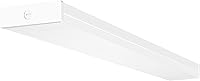
Linkable fixtures can help when you want several lights in a row and plug connections suit your setup. BBOUNDER's 4-foot lights use 40W and provide 4,400 lumens each, with connections for up to 4 lights.
BBOUNDER says the lights can mount directly to a ceiling or hang from it. Include the wattage for each light in the chain when estimating power use.
How do you compare brightness and energy use fairly?
Compare light output and coverage alongside wattage. A lower wattage alone doesn't show whether a light will suit your work area.
The three options above have different light outputs and color temperatures. Barrina provides 5,500 lumens at 5,000K per light, JESLED provides 2,450 lumens at 4,000K per tube, and BBOUNDER provides 4,400 lumens at 6,500K per light.
Those figures describe each light, not the total brightness your garage will get; the number and placement of fixtures also matter.
Use the same target for each setup. If you need brighter coverage over a workbench, compare options that can light that area without leaving dark corners.
Our guide to 4000K vs 5000K garage lighting explains how color temperature affects the look of the light.
Do LED garage lights save money for every homeowner?
They don't save the same amount for every garage. The best choice depends on the old lights, your weekly use, your local electricity rate, and the cost of the change.
Estimate the difference in energy use first, then decide whether the likely savings justify replacing working lights. If you're upgrading because the garage is dim, plan brightness and placement at the same time so the new lights solve the problem without unnecessary fixtures.
Choose replacement tubes if your existing fixture is compatible and the installation method fits. Choose complete shop lights if you're adding or replacing fixtures, then compare the wattage of the whole setup.
For a broader look at fixture choices, see garage lighting plans and safety.
Frequently asked questions
Do LED garage lights use less electricity?
They can use less electricity when their wattage is lower than the lights they replace and they provide enough light for the space. Compare total watts, not just the wattage of one lamp, and account for how many hours the lights run.
How do I calculate the cost to run a garage light?
Multiply the light's watts by its daily hours of use and the number of days it runs, then divide by 1,000 to get kilowatt-hours. Multiply that result by your electricity rate to estimate the energy cost for that period.
Are LED shop lights worth replacing fluorescent fixtures?
They may be worth replacing if the new setup uses less power for similar useful light and runs often enough to offset its cost. Check tube compatibility, ballast requirements, fixture condition, and total wattage before changing an existing fluorescent setup.
Do LED garage lights need less maintenance?
LEDs can reduce relamping needs compared with some older lighting, but lifespan depends on the specific light and its conditions. Check the product's stated service life and warranty, and consider whether the fixture is replaceable if a part fails.