How to Hang High Bay Lights: A Planning Checklist
To hang high bay lights, map the ceiling, check each fixture’s mounting method and power needs, then plan safe access before installation. Follow the fixture instructions and local electrical rules, and use a qualified electrician when wiring or working at height is beyond your training.
On this page (8 sections)
- How do you plan where high bay lights should hang?
- What mounting method should you choose?
- How do you check power and cord reach?
- How can you make installation access safer?
- What should you check before hanging the first fixture?
- How do you check the finished layout?
- What should you avoid when hanging high bay lights?
- What is the final checklist for hanging high bay lights?
To hang high bay lights, plan the layout, mounting points, power, and safe access before lifting any fixture. Check the fixture instructions for its approved mounting method, and have a qualified electrician handle wiring that you are not trained to do.
A clear plan helps you avoid awkward spacing, blocked light, and last-minute electrical changes. First confirm that a high bay fixture suits the ceiling and work area, using our guide to what a high bay light is.
How do you plan where high bay lights should hang?
Mark the ceiling layout before you choose mounting points. Note the room dimensions, ceiling height, beams, doors, work areas, and anything that could block light or access.
Use a simple sketch or measured plan to place fixtures in even rows. Then check the layout against the beam pattern and coverage guidance for the specific fixture; equal spacing alone does not guarantee even light.
Our guide to how many high bay lights you need can help estimate fixture quantity. For spacing and brightness decisions across different areas, see how to light a shop garage.
What should you measure before hanging high bay lights?
Measure the ceiling height, the width and length of the area, and the distance from each proposed fixture to the work surface. Mark large machinery, storage racks, garage doors, and other obstructions on the same plan.
Also check the ceiling structure and the route for cords or wiring. If you cannot identify a solid mounting point or a safe path for power, stop and ask a qualified professional to assess it.
What mounting method should you choose?
Use only a mounting method approved for the fixture and supported by the ceiling structure. High bay lights may use a hook, chain, safety rope, bracket, or another method, depending on the model.
Check the manual for the required hardware, attachment points, and any secondary support. A fixture’s included rope or hook is useful only when installed as instructed and attached to an appropriate structural point.
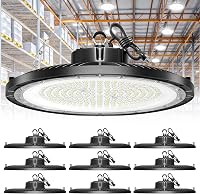
The ONLYLUX 10-pack includes a 5 ft power cord with a 120V plug-and-play design and a safe rope, so it may suit a space where that mounting and power setup fits.
Don't assume that a ceiling finish can carry a fixture. Drywall, thin paneling, or an unknown anchor may not provide the support needed; identify framing or other suitable structure before installing.
How do you check power and cord reach?
Confirm the fixture voltage, connection type, and circuit before installation. A plug-in light needs a compatible outlet within safe cord reach, while a hardwired fixture may require electrical work.
The Amico 10-pack is described as an AC120V fixture and is UL listed. Check its installation instructions and the electrical setup at your site before deciding whether it fits.
Don't stretch a cord across a walkway, pinch it against a door, or use an extension cord as a permanent wiring solution. If the circuit, outlet, or connection is uncertain, have an electrician check it.
How can you make installation access safer?
Plan a stable way to reach the ceiling before lifting a light. Choose access equipment suited to the ceiling height and floor conditions, and keep the area below the work clear.
Use a helper when the fixture or access method requires one. Keep tools and hardware organized, and don't carry a fixture while climbing a ladder.
For a high ceiling, lift equipment may be more suitable than a ladder, but it must fit the location and be used by someone trained. Don't work alone if an emergency would leave you without help.
What should you check before hanging the first fixture?
Compare the fixture instructions with your ceiling plan and power plan. Check the model, mounting hardware, cord or wiring needs, support points, and the position of each light.
The CINOTON 160W fixture includes a US hook and safety chain, and its instructions describe suspended installation. That may be useful when your layout calls for a suspended light and the hook can attach to a suitable support.
The fixture is described as 120V only in its product information, so verify that the circuit and the manual match your installation. Don't infer compatibility from the room’s existing lights.
How do you check the finished layout?
Review the spacing, mounting, and light coverage before repeating the installation across the ceiling. Confirm each fixture sits at the planned height and that no beam is blocked by a beam, shelf, or vehicle lift.
If the first light reveals a dark area or glare, pause and reassess the plan before adding more fixtures. Our guide to best high bay shop lights for tall ceilings covers fixture choices for that setting.
Once installed, check that each light is secure and works as instructed. Keep maintenance access in mind, especially if fixtures hang above storage or equipment.
What should you avoid when hanging high bay lights?
Don't guess at structural support, wiring, or safe working height. Avoid hanging a fixture from an unverified ceiling point, modifying its hardware, or relying on a cord to support its weight.
Don't install a fixture before checking the instructions and the local rules that apply to your space. Stop if the ceiling material, circuit, or mounting method is unclear.
What is the final checklist for hanging high bay lights?
Before installation, confirm the layout, support points, power, hardware, and safe access plan. Choose a light only after its mounting method and electrical needs fit the room.
Use the plan to compare options in our high ceiling lights guide. Pick a suspended fixture when its approved hardware suits the ceiling, and get professional help if any part of the installation is outside your training.
Frequently asked questions
How high should high bay lights hang?
There is no single hanging height for every high bay light. Start with the fixture maker’s instructions, then consider ceiling height, beam spread, obstructions, and the work surface.
Keep fixtures at a consistent height where possible, and confirm the layout with a lighting plan before installation.
Can you hang high bay lights from a ceiling hook?
Use a ceiling hook only when the fixture instructions allow that mounting method and the hook is secured to a suitable structural point. Match the hardware to the fixture’s weight and ceiling material.
Don't attach a heavy light to drywall or an unknown support.
Do high bay lights need a safety cable?
Some fixtures include a safety rope or chain, while others may require separate secondary support under their instructions or local rules. Check the fixture manual and applicable code before hanging it.
A secondary support is not a replacement for a correctly rated primary mounting point.
Should high bay lights be hardwired or plugged in?
That depends on the fixture, the available circuit, and local electrical requirements. Some models have a plug and cord, while others need a fixed connection.
Verify voltage, cord reach, circuit capacity, and mounting instructions, and use a qualified electrician for wiring you are not trained to do.